
01 / Journal
Record the moment.
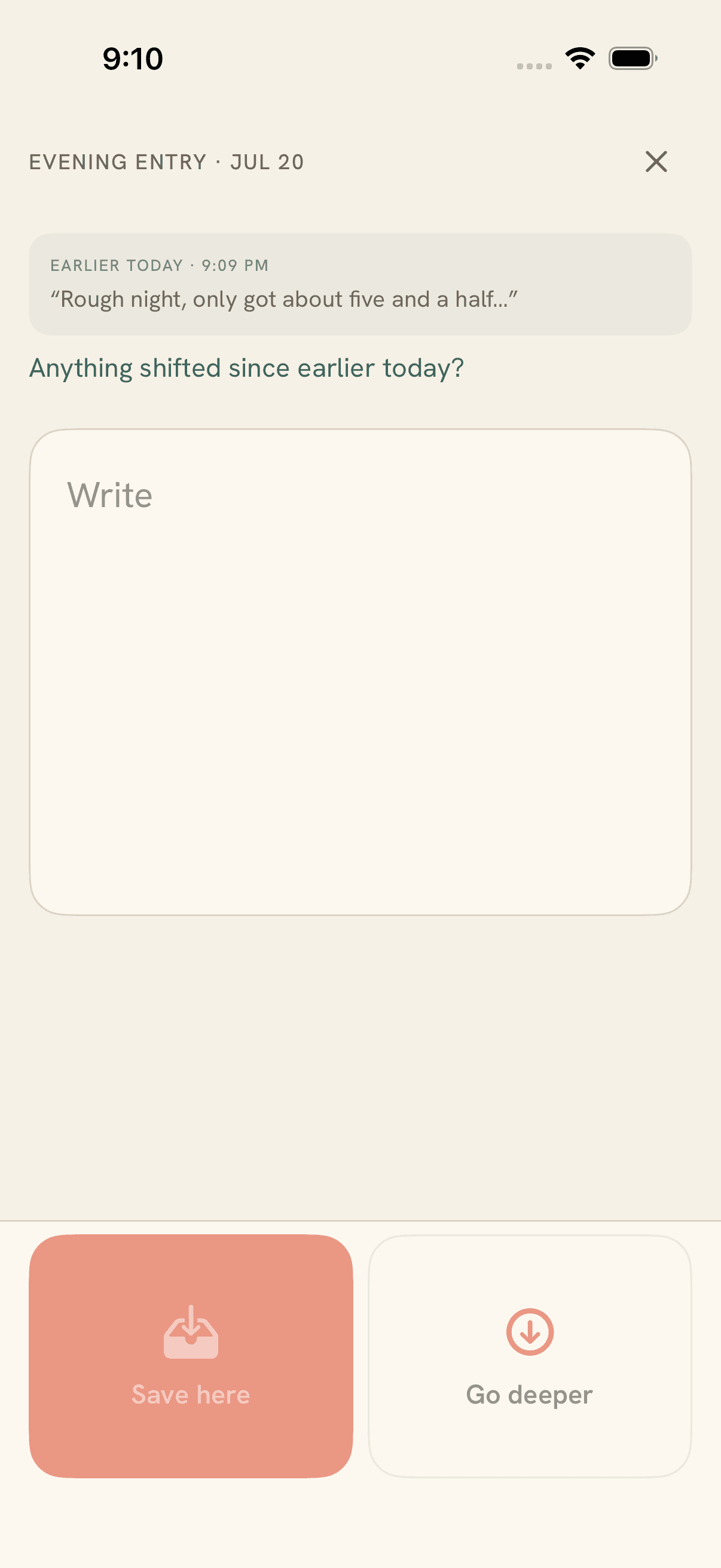
Begin with what actually happened. Motus keeps the visible conversation close to the athlete’s words: a reflection, then one useful question.
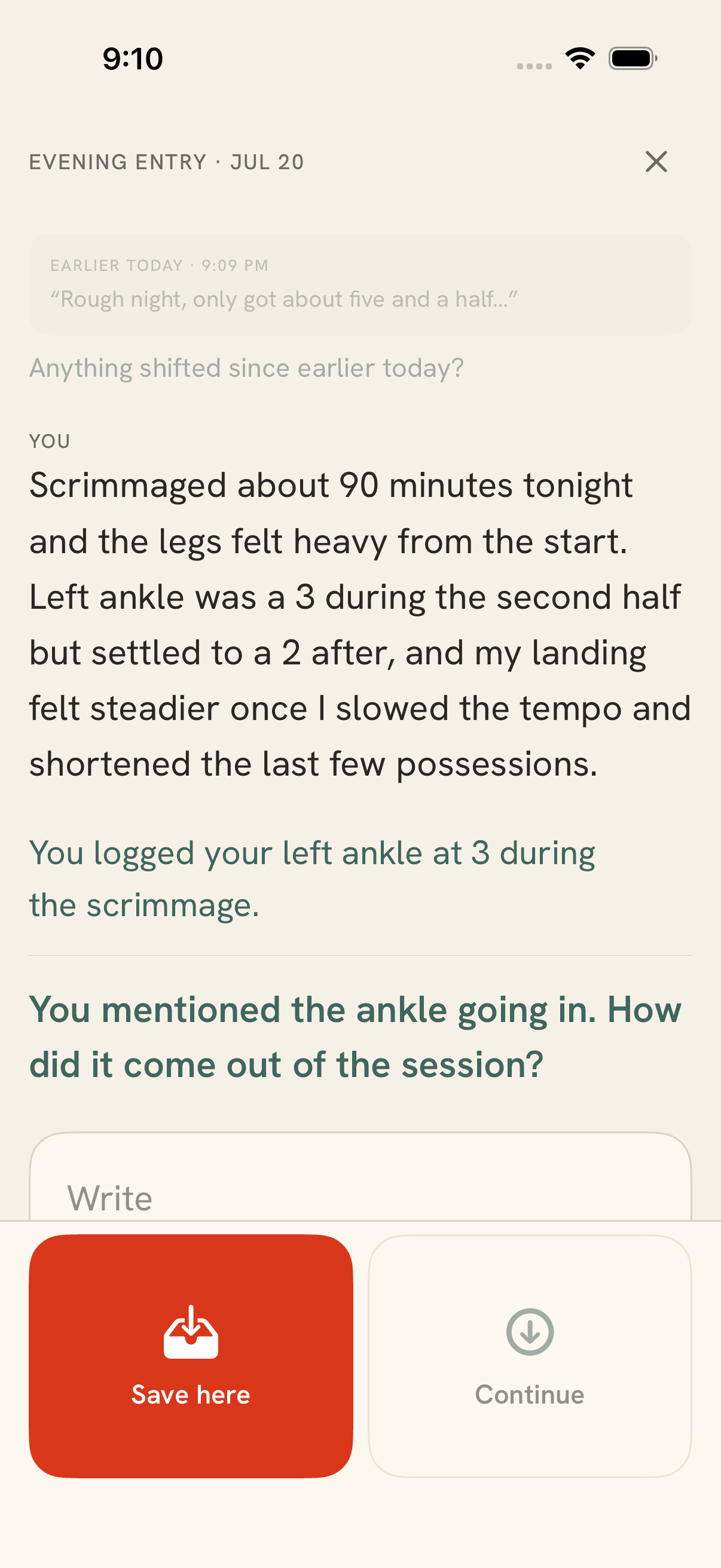
Your words remain the durable source.
A long-view record for athletes
Motus keeps what happened, how it felt, and what you thought close enough to revisit—so a season can become understandable without becoming a score.
“Rough night, but the ankle settled once I slowed down.”
Motus supports reflection. It does not diagnose, prescribe training, predict injury, or provide return-to-play clearance.
01 / Journal
Begin with what actually happened. Motus keeps the visible conversation close to the athlete’s words: a reflection, then one useful question.
Your words remain the durable source.
02 / Calendar
A difficult day is noisy. A season gives it context. Calendar keeps days together without turning consistency into a streak, score, or reason to feel behind.

Repetition becomes visible without becoming a verdict.
03 / Myself
Later interpretations stay beside the records that informed them. They can be inspected, corrected, or replaced when stronger evidence arrives.
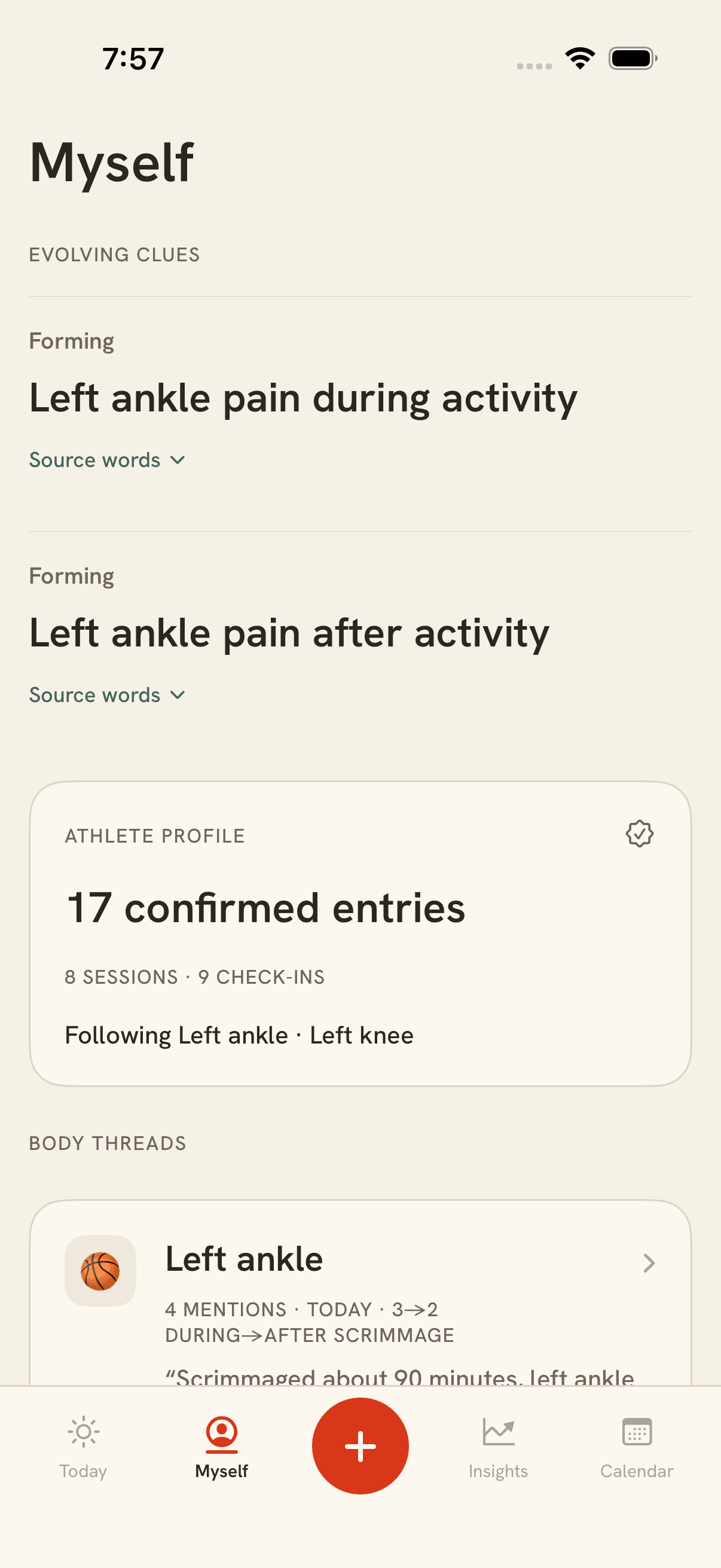
A plausible pattern stays provisional.
A source trail, not a personality score
The product can bring distant moments into the same frame. Every important interpretation should still point back to the words that made it plausible.
“Left ankle felt different after the scrimmage.”
“Not sore. Just flat again after the late week.”
Three moments sit behind this temporary understanding.
A new record can change the pattern without erasing the old words.
The visual language
The Motus illustration archive is not decoration added after the product. Its paths, weather, coastlines, and small living things give reflection a language that remains human.








The science of noticing
One record preserves a moment. Repeated records can reveal relationships worth revisiting. The studies below inform our boundaries; they do not clinically validate Motus.
Sleep, soreness, fatigue, mood, and training load change across a season. Repeated records can make recurring associations easier to revisit: what arrives together, what changes after a difficult week, and what never repeats. They do not prove that one thing caused another or forecast injury.
A “foggy” day can mean many things. Controlled studies link restricted sleep and mental fatigue with lapses of attention, slower responses, and poorer sport-specific decisions. Separate observational work associates habitual short sleep with more injuries in adolescent athletes. That makes context worth keeping—not a basis for diagnosis or prediction.
A thought written down can be revisited instead of becoming a verdict. In controlled studies, particular expressive-writing exercises reduced intrusive thinking or improved some cognitive and self-reported wellbeing outcomes. Results depend on the prompt, person, and context. Motus treats writing as reflection—not therapy and not a promise of resilience.
“Brain fog” is a subjective description, not a diagnosis. The cited injury evidence is observational and cannot predict what will happen to one athlete on one day.
The governing idea
A fluent interpretation can still be wrong. Motus is being designed so source words survive, uncertainty stays visible, and correction is a normal part of understanding.
Read the principlesPrivate beta · iPhone · limited group
Invitations start only after the build, privacy flow, support path, and release evidence pass review. There is no public TestFlight link yet.
Read the beta plan